

Two quotes for the same shower can land far apart, and both companies can be honest. The difference is rarely the glass — it is the scope: what each total quietly includes, and what each quietly leaves for later. A quote that is one round number and the words “shower glass, supplied and fitted” tells you almost nothing, because nearly every argument in this trade starts at the gap between what a customer assumed was included and what the quote actually said. This page teaches the reading, not the prices — the figures themselves, and what moves them, are on our shower glass price guide. Here, we take a proper quote apart line by line: the inclusions to look for, the specification words that matter, the exclusions that move the real total, and the five questions to ask before you accept any of it.
At a glance
- A proper quote is a list, not a number: measurement, glass by panel, hardware by type and finish, seals, fitting, sealing and water-testing — each named, so two quotes can be compared line by line.
- The glass line must name thickness and treatment. “Glass” alone can mean almost anything; our thickness guide explains why 8mm vs 10mm shower glass is a real difference and not a detail.
- “Hardware included” is the vaguest line in the trade. Hinges, rollers, handles and channels should be named by type and finish — that line hides more cost variation than any other.
- The exclusions decide the real total: removal and disposal of the old glass, whether fitting and sealing are in or extra, and whether the figure is an estimate from photos or confirmed after measurement.
- Five questions — at the end of this page — will expose any quote’s scope in about two minutes.
The anatomy of a proper quote
A quote you can rely on reads like a small specification. It opens with what was measured: the opening’s dimensions and the layout agreed — because a quote for a door and panel is a different object from a quote for a single screen, and the document should say which. Then the glass, panel by panel. Then the hardware. Then the installation scope: what the fitting visit includes. Then the terms that surround the number — how long it stands, and what would change it.
None of that is bureaucracy. Each line is there because it is a place money hides. When a quote skips a line, one of two things is true: the item is genuinely not needed, or it has been left out to make the total smaller and will reappear later — as an extra on the day, or as a cheaper substitution you were never shown. The sections below take the lines in the order a reader should check them.
Glass specification: thickness and treatment named
The glass line should tell you four things: thickness, treatment, finish, and panel sizes. Thickness first: shower glass is normally 8mm or 10mm toughened, the two are not interchangeable in weight, feel or hardware, and a quote that will be built in 8mm should not be compared against one built in 10mm as if they were the same product. Treatment second: the glass must be toughened safety glass, and the quote should say so in words — it is the one specification that is not a preference. Finish third: clear, or a privacy finish if that is what you asked for, named rather than assumed, because finishes are different products at different costs. Panel sizes last: a proper quote’s panels match the measured opening, which is one reason a confirmed quote only exists after measurement — a figure written from photos is an estimate of these lines, not the lines themselves.
Red flags on this line are all forms of silence: “glass panels” with no thickness, no treatment named, sizes that are suspiciously round. Round sizes mean nobody has measured yet — which is fine for an estimate, as long as the document calls itself one.
Hardware: named or vague?
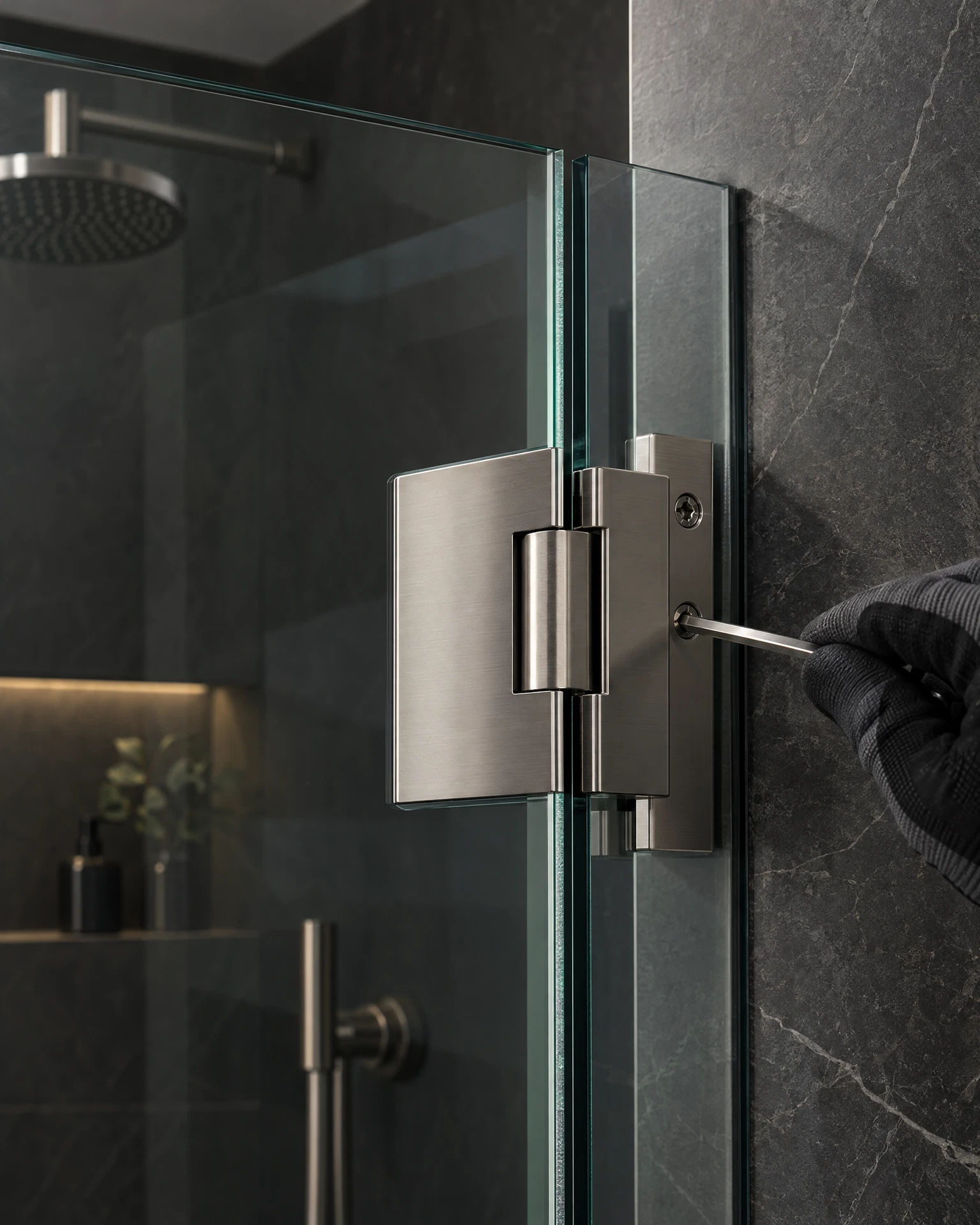
After the glass, hardware is where quotes diverge most — and where the wording gets vaguest fastest. A specified quote names the hardware by type and finish: hinges of a stated pattern in chrome, black or gold; rollers and track for a sliding door; handles, knobs, brackets or channel for fixed panels; and the seals that go with them. An unspecified quote says “hardware included” or “all fittings”, which can describe anything from solid, matched components to the cheapest set that fits — and you will not know which until it is on your wall and ageing.
Two questions cut through it. Which finish, exactly? — because a quote written around chrome and delivered in a mixed set is a substitution you never agreed to. And are the seals part of the hardware line or the fitting line? — because bottom seals, magnetic strips and wall seals are consumable parts that belong in the original scope, not in a first-year repair bill. Hardware quality is also the line with the longest shadow: it is the part of the shower you touch every day and the part whose failure brings a repairer back, so a quote that specifies it is telling you something about the company, not just the shower.
Installation scope: sealing, testing, making good
“Supplied and fitted” should be unpacked into the four things a fitting visit actually involves. Fitting itself: the panels hung, aligned and adjusted. Sealing: the silicone work and seals that make the enclosure keep water — a shower can be perfectly fitted and still leak if the sealing was treated as an afterthought, so the quote should place it inside the scope, not outside it. Testing: a proper install ends with the shower run and the lines checked; the quote’s scope should say the work is water-tested before it is signed off, because a leak found by you a week later is a dispute, while a leak found by the fitter on the day is a adjustment. Making good: the small print of the visit — drilling and fixing into your tiles is inherent, but what about the old holes, the previous silicone lines, the marks of the screen that came out? The quote should say which of those the fitter leaves tidy and which are yours.
Access belongs in this section too, and it is the line apartment owners should read twice: tower buildings often impose work permits, lift bookings and set hours, and a quote should acknowledge whose job those arrangements are. None of this needs to be long. It needs to be written — a scope that lives only in a phone conversation is a scope that will be remembered differently by each side.
Exclusions that move the total
Exclusions are not dishonest — every quote has them, because no glazier’s total includes your plumbing or your tiling. The dishonesty is only in the silence. The exclusions that most often move a shower glass total after acceptance:
- Removal and disposal of the existing glass. A new screen quoted over an old one, with taking the old out left unmentioned, is the classic day-one extra. Old glass is heavy, sharp-edged work to remove and it has to go somewhere; if the quote does not name it, ask.
- An estimate mistaken for a confirmed quote. A figure from photos is a preliminary estimate — genuinely useful, honestly labelled, and not the final number. What confirms a quote is the measurement visit, as our preliminary estimate vs confirmed quote guide explains. Trouble starts when an estimate is treated as confirmed — by either side.
- Work outside the glass line. Moving a shower head or mixer, re-tiling, correcting an out-of-square wall beyond what shaped glass can absorb, making good large areas — all legitimately separate, all legitimately chargeable, all better named before than discovered during.
- Site constraints. Difficult access, parking and permits, out-of-hours requirements in managed buildings — real costs where they apply, and a proper quote says whether they are in, out, or yours to arrange.
- Validity and what changes the figure. A quote should say how long it stands and what would reopen it — a changed layout, a changed finish, an opening that measures differently from the plan. Silence here is how an accepted quote becomes a renegotiation.
Read any quote by hunting these five first. They are where the difference between the two honest quotes at the top of this page actually lives.
Five questions before you accept
Ask these of any shower glass quote — ours included — and the answers will tell you more than the total does:
- Is this figure confirmed after measurement, or an estimate from photos? Both are legitimate; only one is a commitment. If it is an estimate, ask what the confirmed quote waits for.
- What thickness and type of glass, panel by panel? You are listening for a number, the words “toughened safety glass”, and sizes that match your opening — not the word “glass” alone.
- Which hardware, in which finish — and are the seals included? Named types and a named finish, with bottom and magnetic seals inside the scope.
- Does the total include fitting, sealing and water-testing — and removal of the old glass? Four separate items; get each one answered, because “fitted” alone covers only the first.
- What is not included that could still be charged? A company with nothing to hide answers this from its own exclusion list. A pause here is information too.
A quote that survives these five questions in writing is a quote you can sign. One that only survives them on the phone will be re-argued later, at the worst possible moment — with the old screen already out.
Frequently asked questions
Is a quote from photos a real quote?
It is a real estimate, and a useful one — photos and rough sizes are enough to place a job in the right range and say whether it is straightforward. It becomes a confirmed quote only after the opening is measured, because panel sizes, wall plumb and swing or slide clearances are what the final figure is built on. Our WhatsApp quote guide explains what a preliminary estimate can and cannot promise.
Why is one quote so much cheaper than another for the same shower?
Usually scope, not efficiency. Compare the lines before the totals: thinner glass or unnamed treatment, vague hardware, fitting or sealing treated as extras, removal of the old glass left out, or an estimate being compared against someone else’s confirmed figure. When the lines genuinely match — same glass, same hardware, same scope — a price difference is a fair thing to choose on. Until they match, you are not comparing prices; you are comparing documents.
Should the measurement visit be charged for?
Quotes differ on this — some companies charge for the visit and deduct it from the order, some include it, and either is legitimate. What matters is that the quote says which, and whether the visit is the step that confirms the figure. A charged visit that produces a confirmed, panel-by-panel quote is worth more than a free figure that stays an estimate until fitting day.
Does a proper quote include removing my old screen?
Only if it says so. Removal and disposal is real work with a real cost, and it is one of the most commonly left-out lines — particularly in replacement jobs, where everyone is picturing the new glass. If your job involves an existing screen, door or panel coming out, find the line that says who takes it out and where it goes, or ask for it to be added before you accept.
How long should a shower glass quote stay valid?
It should state a validity rather than leave you to assume one — glass and hardware are bought-in materials, and a figure cannot stand forever. If no validity is written, ask, and ask what else would reopen the number: a layout change, a finish change, or an opening that measures differently from the drawing are the usual answers, and they are reasonable ones to agree in advance.
Talk to us about a quote you have received
If you are holding a shower glass quote and want a second pair of eyes on it, message us on WhatsApp on 052 443 2655 with a photo of the quote and a photo of your shower. We will tell you honestly which lines are missing or vague — and if you want a comparison, we will quote you on the same scope, confirmed after measurement, so the two documents can be compared line by line.
This guide is part of our Shower Glass Prices series. Next: Price Per Square Metre, Explained: Why Two Same-Size Showers Cost Differently →

