

A fixed shower-screen quote depends on the panel size, glass specification, fixings and work needed at the walls and floor. Send a photo and rough dimensions for an initial estimate. We confirm the specification and final price after checking the opening on site.
At a glance
- No guide figure is published for this system — so none is stated, estimated or ranged here. The number follows your panel’s specification and measurement.
- The glass is the first driver: panel area, height and thickness (10mm is our standard) are all read from your opening, and shaped cuts add made-to-order work.
- Fixings and bracing are the second: how the panel is held — channel, clamps, a bracing bar on a long run — changes both hardware and fitting work.
- Layout multiplies everything: a return panel or a second screen is not an add-on line; it is another measured sheet with its own hardware and sealing.
- Sealing and making good finish the quote: the junctions at floor and wall, and the state of what the panel meets, are real work with real variation.
Panel size and thickness
A fixed panel’s glass is specified from the opening, so its cost starts with two measurements: how wide, and how tall. Area is the raw input — a screen that runs most of a wet-room wall is simply more glass than one guarding the splash zone of a compact shower — and height matters beyond area, because a tall panel is heavier to transport, carry and stand up safely, and past a certain size it changes the handling from routine to planned. Shape rides on top: a rectangular panel is the simplest path through manufacture, while a panel cut around a sloped ceiling, a window reveal or a built-in bench is drawn for that room alone.
Thickness is the other glass decision. Fixed panels and walk-ins are structural in a way door glass is not — a panel stands on its fixings with no frame to lean on — and 10mm is our standard for this work. The difference between thicknesses, and what each is genuinely suited to, is covered in our guide to 8mm vs 10mm shower glass; the price point here is simpler: thickness is part of the specification the quote is built on, and a quote that never names it has skipped the first line of its own anatomy.
Fixings and bracing
Glass this size does not hold itself up, and how it is held is a cost line with real spread. A panel can sit in a continuous channel fixed to wall and floor, or stand on clamps and brackets at intervals, and the two differ in hardware, in the preparation of the surfaces they fix to, and in fitting time. Then there is bracing: a long fixed panel, fixed at one end only, flexes — and a panel that flexes works its seals and worries its owner — so longer runs are steadied with a bracing bar or a support to a return wall or ceiling. Whether your layout needs one is a function of panel length and fixing points, which is to say a measurement answer, but when it is needed it is a genuine component of the job: another part, another fixing into structure, another alignment to set.
The honest way to read this section of a quote is as engineering, not decoration. The fixing method should be named, the bracing (if any) should be listed, and both should match the panel they are holding. A quote that prices a long panel with no visible means of support has not saved you money; it has deferred a wobble.
Returns and second panels
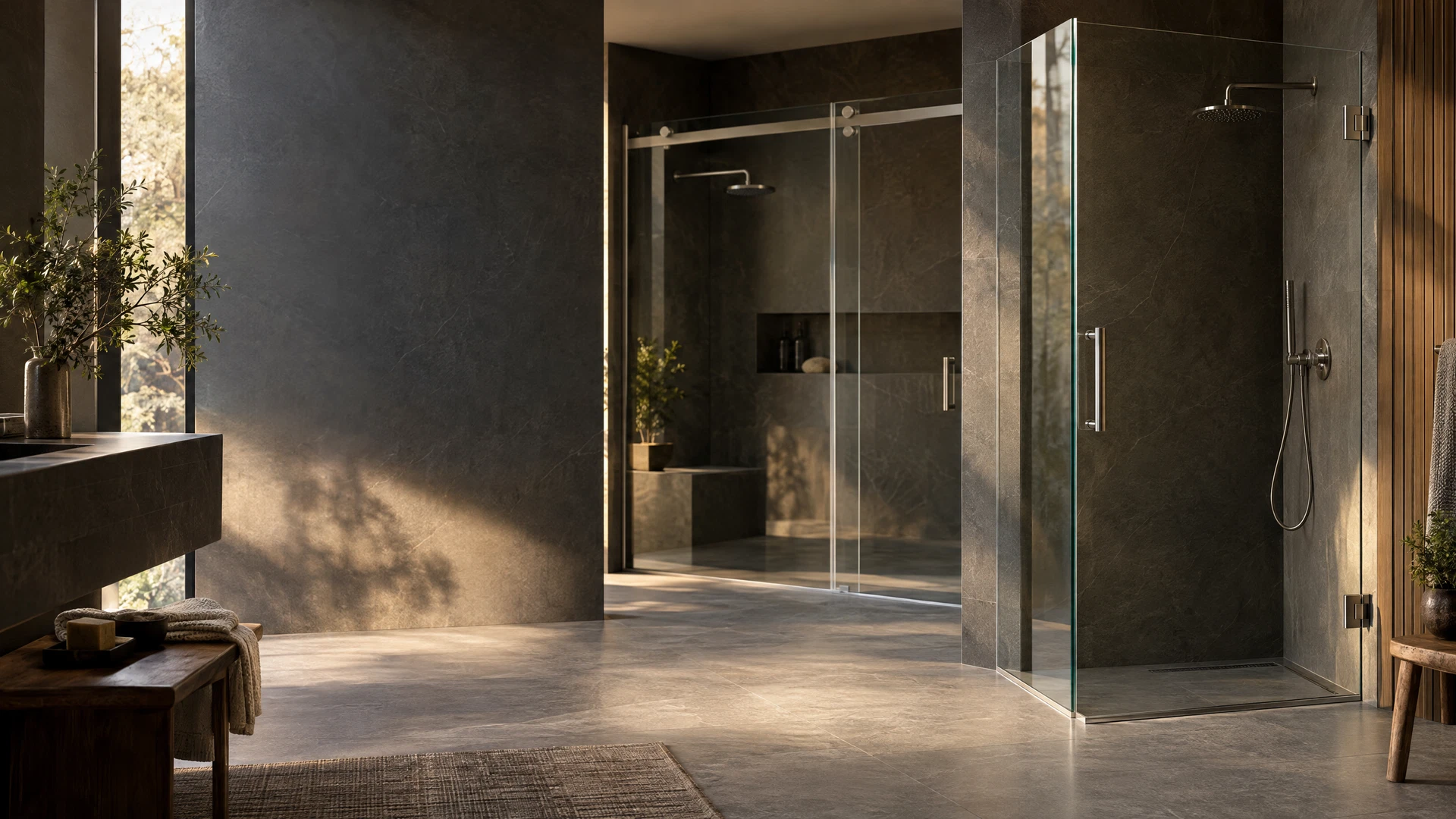
The single-screen walk-in — one panel, one open side — is the baseline layout, and most real bathrooms depart from it. A return panel at right angles to contain splash, a second screen closing the far end, a panel plus a hinged door where a fully open entry throws too much water: each addition is not a percentage on the first panel but a whole second object — its own measured sheet, its own fixings and bracing questions, its own sealing lines, its own share of the fitting visit. Layout is therefore the largest single variable between two walk-in quotes, larger than any finish or fitting choice, and it is usually decided by the room: how far the spray travels, where the dry floor has to start, how the entry is reached. Choosing that layout is a design question with its own home — our shower screens page routes the options — but once chosen, its price effect is simple arithmetic: panels are priced as panels, and two are not one-and-a-bit.
Sealing and making good
A fixed panel has no door seals and no moving parts, so its waterproofing lives in two places: the junctions where glass meets wall and floor, sealed along the fixing lines, and the open edges, which rely on layout rather than seals. The junction work varies with what it meets. A panel sealed to a sound, true tiled wall is a clean line of work; a panel meeting an out-of-plumb wall, a tray with a raised lip, or a floor that falls the wrong way asks the sealing to bridge and compensate, and that is slower, fussier work that a proper quote allows for. One boundary is worth stating plainly, because it is often confused: sealing glass junctions is not waterproofing the room. The tanking beneath tiles and tray is the bathroom’s own construction; the glazier seals the glass into it, and a quote for glass should not quietly imply the room’s waterproofing is included — or quietly exclude the junction sealing that is.
Making good belongs in the same reading. A new panel usually follows an old arrangement out — previous fixing holes, old sealant lines, the shadow of the screen that was there before — and whether the quote tidies those or leaves them is a line worth finding before, not after, the visit.
Why no honest per-panel figure exists without measurement
Put the drivers together and the reason for this page’s missing number should be visible. Two jobs both described as “a walk-in screen” can differ in panel area by a factor of two, in fixing method entirely, in panel count, and in the condition of every surface the glass meets. A single published figure for that spread would have to be either so hedged it says nothing, or precise enough to be wrong for almost everyone who reads it. Systems with a door mechanism and a bounded set of configurations can carry a guide figure honestly; a sheet of glass cut to a unique opening cannot, which is why the table in our shower glass price guide covers the systems it covers and stops where it stops.
What exists instead is a sequence: photographs and rough sizes buy a preliminary view — enough to discuss layout and likely drivers — and a measurement visit converts it into a confirmed quote, itemised by the sections above. That sequence, and what each stage can and cannot promise, is set out in our preliminary estimate vs confirmed quote guide. For this system more than any other, the measurement is not a formality before the price; it is where the price is actually made.
Frequently asked questions
Why won’t you publish even a rough range?
Because a range is a figure with softer wording, and no guide figure for this system is published — the spread between a small single screen and a two-panel walk-in is too wide for any range to inform rather than mislead. What we publish instead is the full driver list on this page — so the confirmed quote you receive can be checked, line by line, against real causes.
Is a walk-in cheaper than a door enclosure, since there’s no door?
Not as a rule, and the comparison can’t be made from the labels. A walk-in gives up the door’s hardware and mechanism but often spends the difference on glass area — walk-in panels tend to be large, because the panel itself is the only splash defence. Which side of the line a given bathroom falls on is decided by panel size, count, fixings and layout — all measurement facts, not catalogue facts.
Does glass thickness change the price?
Thickness is part of the glass specification the quote is built on — it affects the panel itself and the hardware specified to hold it — so yes, it is one of the inputs, and it is why a quote should name the thickness it is pricing. Our standard for this work is 10mm; the comparison behind that choice is in the thickness guide linked above. What thickness never does is appear as a standalone published figure: it is priced inside your measured panel, not off a list.
What makes one walk-in quote higher than another for the same bathroom?
Read the two quotes against this page’s four drivers: panel dimensions and any shaped cuts; the fixing method and whether bracing is included; how many panels the layout really contains; and how much sealing and making-good each allows for. Quotes diverge because scopes diverge — the cheaper document has usually left a driver out, and the driver has not left the bathroom.
What do you need from me to start a fixed panel quote?
Photos of the shower area, the rough width and height you have in mind, and where the panel would fix — wall, tray or tiled floor. Tell us your area. From that we can talk layout and drivers honestly, and arrange the measurement that produces the confirmed, itemised quote.
Talk to us about your fixed panel or walk-in
If you are planning a fixed panel or a walk-in, message us on WhatsApp on +971 52 443 2655 with photos of the shower area and your rough sizes. We will talk you through the layout and the drivers that will shape the quote — and arrange the measurement that turns them into a confirmed figure, itemised line by line.
This guide is part of our Shower Glass Prices series. Next: Shower Repair Costs: Hinges, Seals, Silicone and Rollers — What Drives the Bill →

