
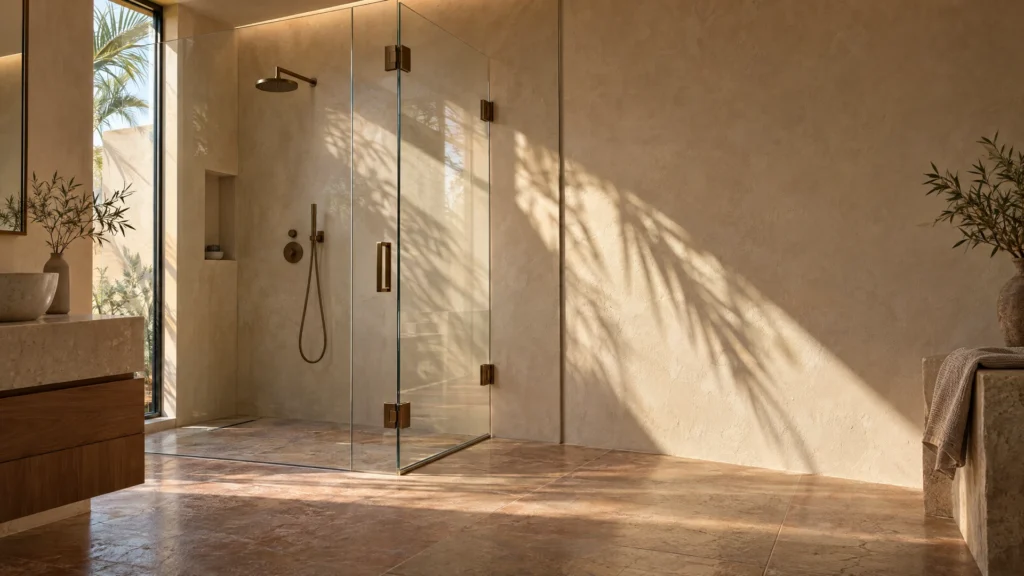
Every shower enclosure reaches a point where the question changes. It stops being “what is wrong with it?” and becomes “is it worth another repair?” Neither answer is automatic. A sound enclosure with one worn hinge deserves the hinge; a tired enclosure can absorb repair after repair while the layer that is actually failing never gets touched. This guide sets out the framework we use to make the call — three tests, applied to the whole enclosure rather than to whichever part failed last: the glass itself, the hardware, and whether the enclosure was ever right for the opening. It is a shower glass repair decision, and it should be made once, with the whole picture in view, rather than one small invoice at a time.
At a glance
- Start with the glass: toughened glass does not wear out gradually — it is either sound or damaged. Sound glass keeps repair on the table; damaged glass settles that panel’s question on its own.
- Hardware decides more than age does: hinges, rollers and handles are replaceable only while replacements can be matched to the holes and footprints already in the glass.
- Configuration is the silent test: an enclosure that was wrong for its opening leaks by design, and no repair fixes a design.
- The trap is deciding one repair at a time: small, reasonable repairs on a structurally failing enclosure are how the money becomes unrecoverable.
- The checklist at the end turns the three tests into a call you can make from photographs.
Start with the glass itself
Glass is the one part of an enclosure that does not really age. A toughened panel does not get tired; it is either sound — no chips at the edges or around the hardware holes, no cracks, no damage that matters — or it is damaged, in which case that panel’s question is already answered. Everything else in the enclosure is a wearing part. The glass is the asset the repairs exist to protect.
So the first test is an inspection, not an opinion. Run an eye along every edge, especially the bottom edge and the corners, and around every point where hardware passes through or clamps the panel. Chips concentrate there because that is where stress concentrates. A panel that passes — sound edges, true shape, no cracks — is worth building repairs around. A panel that fails is a replacement regardless of what the rest of the enclosure needs, and the decision narrows to whether the remaining panels and hardware deserve to stay alongside it.
Cosmetic ageing sits in a different category. The permanent clouding and etched water marks that hard water leaves on older glass are unsightly, and no repair in this guide removes them — but they are a surface condition, not a structural one. Clouded glass that is otherwise sound does not force replacement; it simply belongs in the honest column when you weigh how the finished bathroom will look.
Hardware: available or orphaned?
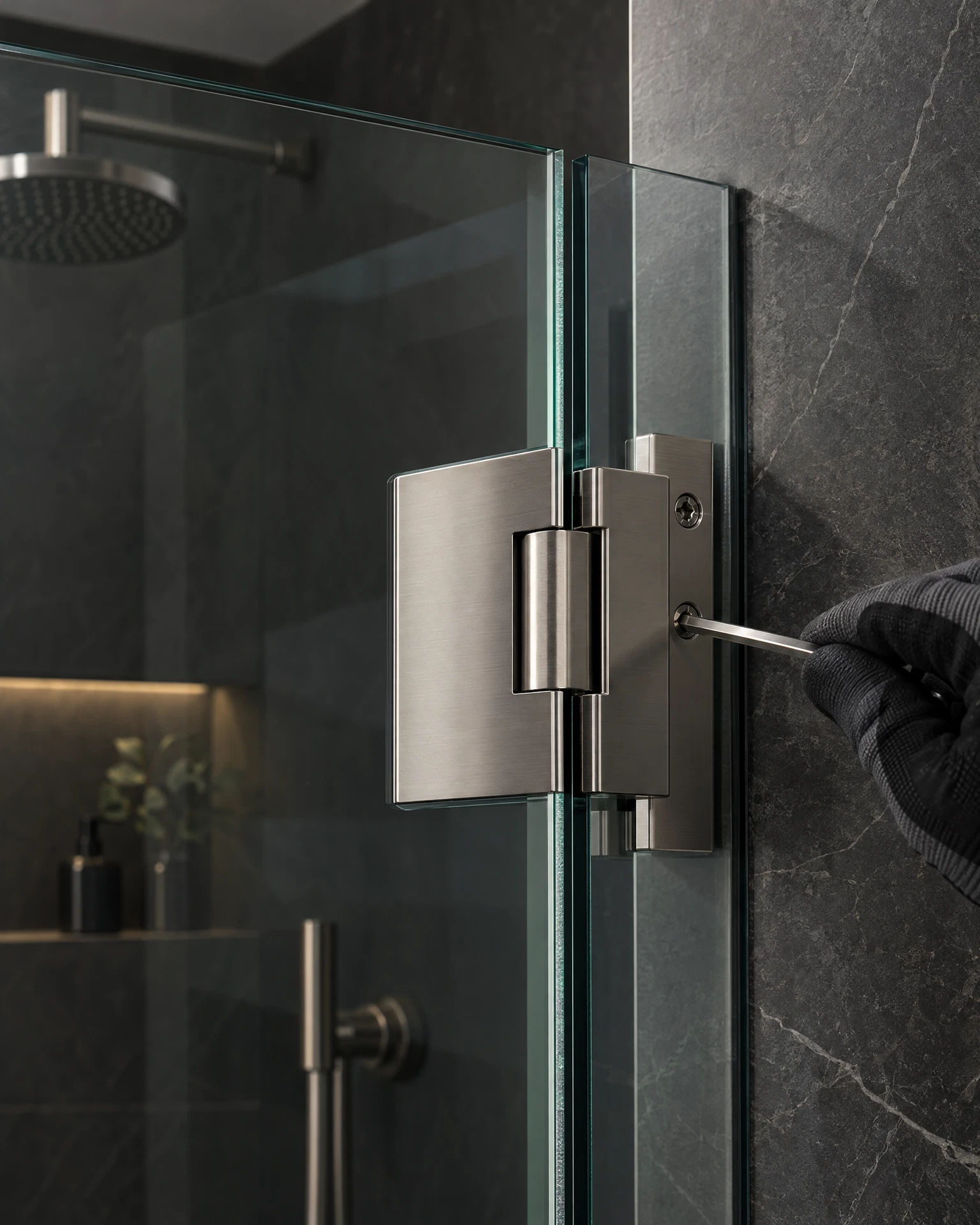
Doors hang, slide and seal on hardware, and hardware wears: hinge pivots develop play, rollers flatten, handles and magnetic strips tire. Worn hardware on sound glass is the classic repair case — provided the replacement can be matched. That proviso is the second test, and it is more mechanical than it sounds. The holes in toughened glass were drilled before toughening and cannot be moved; hinges and clamps were made to a pattern. A replacement hinge must match the existing hole positions and clamp footprint, or it cannot be fitted to that panel at all.
While a system is current, matching is routine. When a profile or hinge pattern has been discontinued and nothing current matches it, the hardware is orphaned — and an enclosure with orphaned hardware is one failure away from a decision it cannot repair its way out of. That does not automatically mean replace everything: sometimes a panel can be remade to accept current hardware while the rest of the enclosure stays. But it moves the balance, and it should be known before money is spent, not discovered after. Whether a specific worn hinge can be adjusted, repaired or replaced is a component-level decision, worked through in our guide to broken or worn shower hinges: adjust, repair or replace; the point here is what its availability means for the whole enclosure.
Was the enclosure right for the opening?
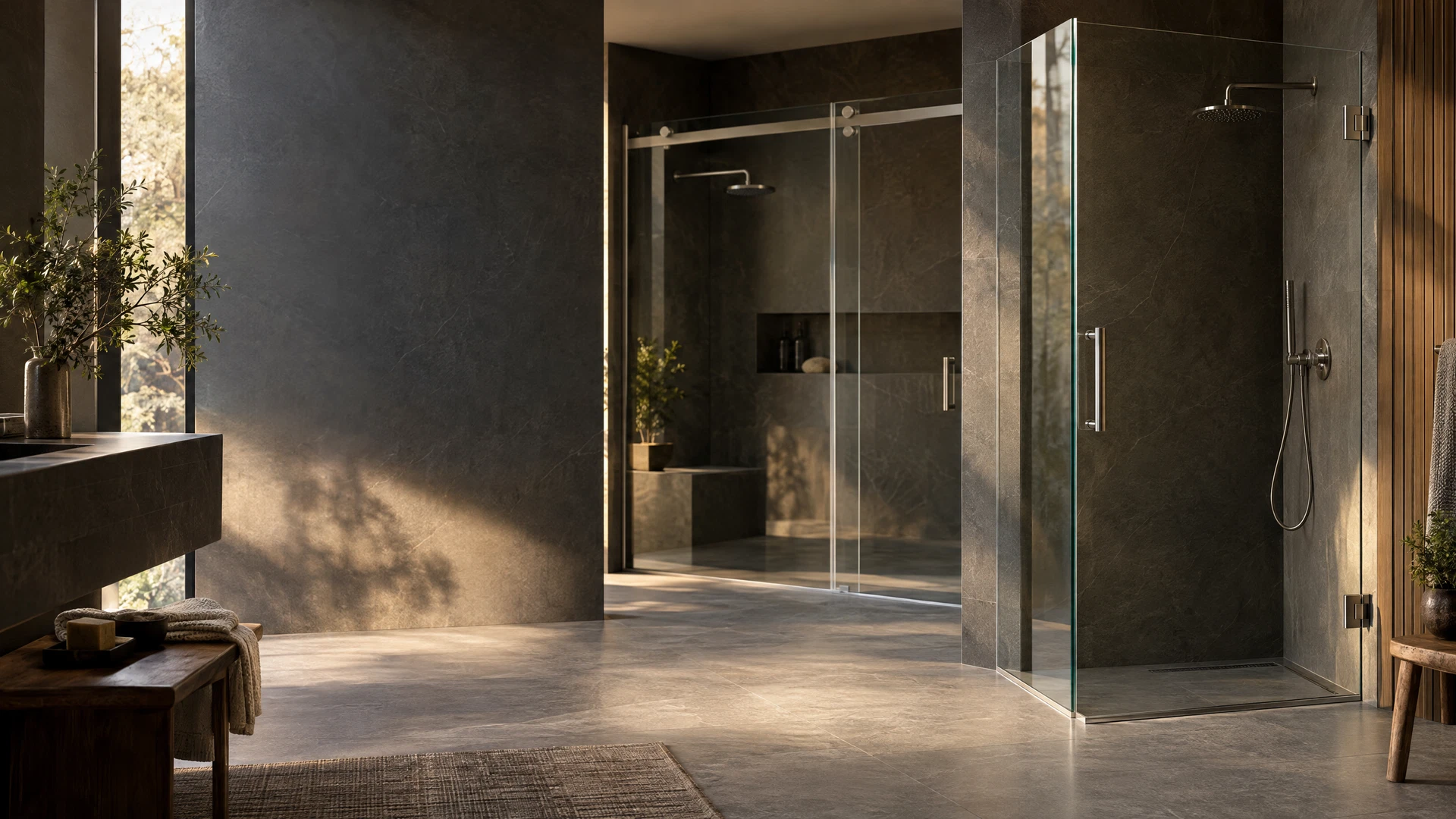
The third test is the one most often missed, because nothing in it is broken. An enclosure can be mechanically sound — sound glass, working hardware, fresh seals — and still be wrong for its bathroom: a door whose swing is obstructed so it has never closed as designed; a fixed panel too short for the shower’s splash zone, so water escapes by layout rather than by failure; a configuration that sends the water path out of the enclosure every single shower. Enclosures like this generate a steady history of “repairs” that are not repairs at all, because there is nothing faulty to fix — the design itself produces the symptom.
If your enclosure’s problems have been present, in some form, since it was new, suspect this test before you suspect wear. Replacing the enclosure with one configured for the actual opening ends the pattern; another round of seals does not.
The repeated-repair trap
The trap is rarely a single bad decision. It is a sequence of small, individually reasonable ones: seals this year, a hinge the next, an adjustment after that — each defensible, each resetting the clock briefly, none addressing the layer that is actually failing. The money spent along the way is not recoverable, because it was spent on an enclosure whose glass, hardware availability or configuration had already failed one of the three tests; the repairs were maintaining the symptom, not the asset.
The way out of the trap is simply to run the tests in order, once, before the next repair is booked. If the enclosure passes all three, repair it with confidence — the framework says so as clearly as it says the opposite. If it fails one, the honest comparison is no longer “repair versus replace” in the abstract; it is “another repair on a failing layer versus putting the enclosure right.”
Making the call: a checklist
Work through it in order — the first failure usually decides.
- Glass: every panel sound at its edges, corners and hardware holes, with no cracks? If a panel is damaged, that panel is replaced; decide the rest separately.
- Hardware: are the hinges, rollers and handles a pattern that can still be matched to the existing glass? If orphaned, repair options narrow sharply.
- Configuration: does the enclosure suit the opening — swing or slide path clear, splash contained by the layout, water path leading in, not out? If not, repairs will keep “failing” because the design produces the fault.
- History: have past repairs addressed causes, or the same symptom repeatedly? A repeating symptom is evidence for the configuration test, not for another attempt.
- The verdict: sound glass + matchable hardware + right configuration = repair, and do it properly. Any one of the three failed = get the enclosure measured for replacement and compare honestly, with the failed test named.
When the decision lands on replacement, the job itself is covered on our shower glass replacement page.
Frequently asked questions
How old is too old for a shower enclosure?
There is no number of years that answers it — age only matters through the three tests. An older enclosure with sound glass, matchable hardware and a layout that suits its bathroom is a repair. A younger one with a chipped panel or orphaned hinges may not be. Anyone who gives you a lifespan instead of an inspection is guessing.
Can I replace just one damaged panel and keep the rest?
Often, yes — if the remaining glass is sound and the hardware pattern can still be matched, a single panel can be remade to the measured opening and the enclosure continues. It is one of the most common outcomes of running the checklist, and it is neither a full repair nor a full replacement.
My hinges are a discontinued pattern. Does that mean replacing everything?
Not necessarily. It means the hinge question can no longer be answered on its own. Sometimes a matching pattern still exists in current ranges; sometimes one panel is remade drilled for current hardware. The hinge-by-hinge decision is covered in our hinge guide — what matters here is finding out before you pay for other repairs around it.
Who should make the call — and from what?
From evidence, not from a doorstep opinion. Photographs of the whole enclosure, close-ups of edges, hinges and rollers, and a note of what has already been repaired will usually run all three tests. That is how we start every one of these assessments on WhatsApp.
Talk to us about the repair-or-replace call
If you are weighing another repair against starting again, message us on WhatsApp on +971 52 443 2655 with photos of the whole enclosure and close-ups of its edges and hardware. Tell us what has already been repaired, and we will run the three tests with you — glass, hardware, configuration — and tell you plainly which side of the call your enclosure falls on.
This guide is part of our Shower Glass Repair series. Back to the start of this series: Shower Door Leaking at the Bottom? How to Find the Real Cause →
