

You have two quotes for the same shower, and the totals are far enough apart that one of them must be wrong. That is the natural conclusion — and it is usually the wrong one. In this trade, two honest companies quoting the same bathroom routinely produce different totals, because a quote total is not the price of a shower; it is the price of a scope — a particular glass specification, a particular hardware set, a particular amount of installation work, and a particular set of written terms standing behind it. Change any one of those and the total moves, without anyone being dishonest and without anyone being careless. The reverse is also true: a cheaper quote is not automatically a thinner one, and a dearer quote is not automatically a padded one. Neither can be judged from the number. This article teaches the comparison itself: how to rebuild two quotes into the same set of lines, so that what you are finally comparing is genuinely like for like — and the price difference that remains is one you can choose on with your eyes open. If you are still learning to read a single quote, that is a separate skill with its own guide; here, the quotes are assumed to be in your hand.
At a glance
- Compare lines, not totals: rebuild both quotes into the same rows — glass, hardware, scope, sealing and testing, removal, terms — and find where they actually differ.
- Glass first: thickness and treatment must be named in writing on both. A quote silent on thickness cannot be compared with one that specifies it.
- Hardware second: named components in a named finish can be compared; the word “included” cannot.
- Scope third: an estimate from photos and a quote confirmed after measurement are different documents — never compare one’s total against the other’s.
- Warranty is a document, not a conversation: what is covered, for how long, and what is excluded — in writing, from every company, before the totals mean anything.
- A price gap that survives alignment is a fair thing to choose on. A gap that disappears under alignment was never a price difference at all.
Put the quotes side by side: the checklist
Start by refusing to look at the totals. Take a sheet of paper — or a notes page — and draw the same rows for each quote. Every row below is a place where two quotes for one shower can legitimately differ:
- Glass: thickness, treatment, finish, number and sizes of panels.
- Hardware: hinges, rollers, handles, channels or clamps — type and finish, seals included or not.
- Measurement status: estimate from photos, or confirmed after a measurement visit.
- Installation scope: fitting, alignment, sealing, water-testing, making good.
- Old glass: removal and disposal of the existing screen or enclosure — in, out, or unmentioned.
- Site items: permits, lift bookings, access arrangements in managed buildings — whose cost, whose job.
- Terms: validity of the figure, what would change it, and the written warranty position.
Now fill each row in from each document, and mark every cell the document does not answer. Those blank cells are the comparison. Most quote pairs that look wildly different turn out to differ in two or three rows — one has priced 8mm glass against the other’s 10mm, one includes removal and the other does not, one is an estimate and the other is confirmed. Until the rows align, there is no price difference to argue about; there is only a scope difference wearing a price tag. The sections below take the rows in the order they mislead most.
Glass: thickness and treatment in writing
Glass is the largest single line in any quote, and the easiest to leave vague. For a comparison to mean anything, both documents must state the same four things: thickness — shower glass is normally 8mm or 10mm toughened, the two differ in weight, stiffness and the hardware they need, and our guide to 8mm vs 10mm shower glass sets out why the difference is real; treatment — the words “toughened safety glass”, stated, not implied; finish — clear or a named privacy finish, since finishes are different products; and the panels themselves — how many, in what sizes, matching the measured opening.
The comparison failures here are failures of silence. If one quote names 10mm toughened glass panel by panel and the other says only “glass panels”, you do not have a cheaper quote and a dearer one — you have a specified quote and an unspecified one, and the unspecified one can be built down to its total in ways you will only discover on fitting day. The remedy is not suspicion; it is a question. Ask the vaguer document to state its glass in the same words as the clearer one, and compare again. A company quoting genuinely equivalent glass can say so in one line.
Hardware: named ranges vs ‘included’
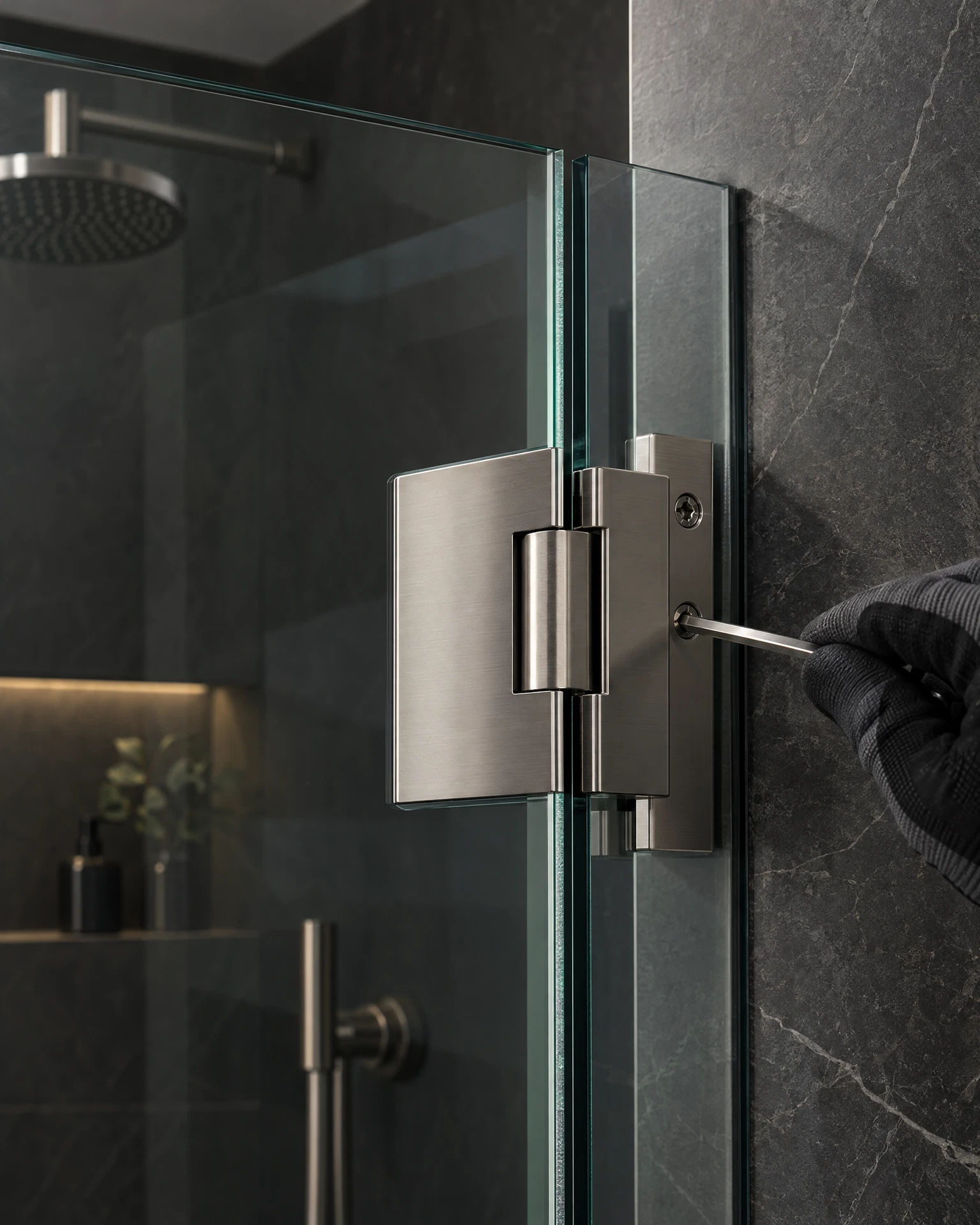
Hardware is where quotes diverge most quietly. One document will name its components — hinges of a stated type in a stated finish (chrome, black and gold are the finishes most often specified in this market), the handle pattern, the channel or clamps, the seals. Another will carry a single line: “hardware included”. Both might be describing perfectly good components. But only the first can be compared, because “included” tells you a category, not a product — and hardware spans a wider range of quality and cost than almost anything else in the shower. It is also the part you touch every day and the part whose wear brings a repairer back years later, so the difference between two hardware sets is not cosmetic; it is a difference in how the shower ages.
Align this row by asking each company the same three questions: Which components, of what type? In which finish? And are the seals — bottom, magnetic and wall seals — inside the hardware line or the fitting line? A quote that names a range is giving you something checkable against the finished work. A quote that stays at “included” after being asked is not necessarily hiding anything — some companies genuinely quote in summary — but it is asking you to compare an unknown against a known, and you are entitled to price that uncertainty into your decision rather than pretend it away.
Scope: measurement, sealing, testing, making good
Two scopes hide inside every quote, and both must match before the totals can. The first is what state the figure is in. One of your quotes may be a preliminary estimate built from photos; the other may be confirmed after measurement. Those are different instruments — the estimate is a range-finder, the confirmed quote is a commitment — and our preliminary estimate vs confirmed quote guide explains exactly what each can promise. Comparing an estimate’s total against a confirmed total, in either direction, tells you nothing about either company’s pricing.
The second is what the fitting visit includes. Fitting and alignment, certainly — but also: the sealing work that makes the enclosure keep water; a water test before sign-off, so a leak is found by the fitter rather than by you a week later; making good around the work — old fixing holes, previous silicone lines, the marks of the screen that came out; and removal and disposal of the existing glass, which is heavy, sharp-edged work that is one of the most commonly left-out lines in replacement quotes. Add the site items — tower permits, lift bookings, set working hours — and ask whose cost and whose job each one is. None of these lines makes a quote good or bad. All of them make it different, and a like-for-like comparison prices them in on both sides or out on both sides, never in on one and silent on the other.

Warranty: what is actually written
Every comparison eventually reaches the question of what stands behind the work — and this is the row where unwritten words do the most damage. Companies’ warranty positions genuinely differ: what is covered, for how long, and what is excluded are commercial choices, and this article describes no company’s terms — including ours — because the only version of any warranty that matters is the one that company will give you in writing. So compare documents, not impressions. From each company, ask for the warranty position in writing and read for five things:
- What it covers — the glass itself, the hardware, the seals, and the workmanship are four different things; a warranty may cover some and not others.
- How long each part is covered — the periods may differ by component, and a single headline period may apply to only one of them.
- What it excludes or voids — impact damage, misuse, unauthorised adjustment and limescale damage are the kinds of exclusions to look for; seals in particular are treated as consumable parts by many companies, which is legitimate — provided it is written.
- What claiming actually involves — who you contact, whether an inspection visit is charged, and what remedy is offered: repair, replacement of the part, or something else.
- Whether it is written at all — a warranty described warmly on the phone and absent from the quote document is, for comparison purposes, absent.
Two quotes whose glass, hardware and scope rows align can still differ honestly here — one standing behind its work in writing for a stated period, the other offering less, or the same words without the document. That difference has a value, and it belongs in your decision as a value judgement — not converted into a guess that the cheaper company must be cutting corners elsewhere. Judge each row for what it is.
Then decide on value, not just number
When the rows are aligned, one of three things will be true, and each has its own right response. The totals may converge — the gap was scope all along, and the “expensive” quote was simply the more complete document; now you are choosing between genuinely equivalent offers, and service, availability and how each company handled your questions are fair grounds. A gap may remain between truly equivalent quotes — same glass, same hardware class, same scope, same written terms. That is a real price difference, and choosing the lower one is a perfectly sound decision; this method exists to find that situation, not to talk you out of it. Or one quote may stay unalignable — its glass unnamed, its hardware at “included”, its warranty verbal — however many questions you ask. That is also information: not proof of anything sinister, but a measure of how much of the comparison you are being asked to take on trust, which you can weigh alongside the total.
What the method asks of you is only this: do the alignment before the choosing, ask every company the same questions, and get the answers in the documents. Two quotes compared that way stop being two numbers and become two offers — and offers can be judged. Our shower glass price guide sets out what drives prices in this market, so you can sanity-check any total against the scope it claims to cover.
Frequently asked questions
One quote is much cheaper than the other. Does that mean it is cutting corners?
Not necessarily — and assuming so is the most common comparison mistake. Work the rows first: thinner or unnamed glass, hardware left unspecified, fitting or sealing treated as extras, removal of the old glass left out, or an estimate set against a confirmed quote each explain large gaps between honest companies. If the rows genuinely align — same specification, same scope, same written terms — then the cheaper quote is simply cheaper, and choosing it is reasonable.
Should I show each company the other’s quote?
You can share a total, but a total on its own pressures a company to match a number rather than a scope — and a matched number on a thinner scope leaves you worse off than either original quote. The more useful move is to ask each company to quote, or re-quote, against the same written specification: the glass, the hardware, the scope and the terms you want. Two documents written to one specification are the comparison you actually need.
Is a verbal warranty promise worth anything in a comparison?
Treat it as unwritten until it is written. Warranty positions differ legitimately between companies, and a promise made in conversation — however sincerely — cannot be compared against another company’s written terms, because you cannot read its cover, its period or its exclusions. Ask every company, us included, for the position in writing and compare the documents.
What if neither quote itemises anything?
Then itemising them is your first job, and it is mostly a matter of asking both companies the same short list: glass thickness and treatment, hardware by type and finish, whether fitting, sealing and water-testing are included, whether removal of the old glass is included, whether the figure is an estimate or confirmed after measurement, and the warranty position in writing. The answers — including any company that declines to give them in writing — are the comparison.
Both quotes aligned and the prices are close. How do I choose?
On the things that are left, which are real: how each company communicated, whether its figure is confirmed after measurement or still an estimate, how its written terms read, and your confidence that the document you sign is the shower you will get. When scope and price are level, those are not soft factors — they are the substance of the difference that remains.
Talk to us about the quotes in front of you
If you are holding two shower glass quotes that seem impossible to reconcile, message us on WhatsApp on +971 52 443 2655 with photos of both documents and a photo of your shower. We will line them up row by row and tell you honestly where they differ — including where another company’s scope is genuinely the fuller one. And if you want our number in the comparison, we will quote you against the same specification, confirmed after measurement, so all three documents can be read the same way.
This guide is part of our Shower Glass Prices series. Next: Getting a Quote on WhatsApp: Photos for a Preliminary Estimate — and What Confirms It →

