

For a complete sliding shower door in 10mm glass, the guide figure is AED 2,800–4,500, with the exact quote confirmed after measurement. The quote covers the whole system, not just the glass: the panels themselves, the track system, the rollers (and soft-close where the system includes it), the guides, seals and threshold, plus measurement, delivery and fitting. A sliding door is a sheet of glass that travels — carried on rollers, inside a track, kept in line by guides — so the running gear is where the engineering, the quality spread and most of the variation between two sliding quotes actually live. This page takes a sliding quote apart line by line — the glass and panels, the track system, the rollers, the guides and seals, and the fitting — for the sliding shower glass doors we install. The system figures themselves are in our shower glass price guide; here we explain what a sliding figure is made of, so you can tell a specified system from a vague one.
At a glance
- The track system is the quote’s centre of gravity: header track, its fixings and the way the panels hang from it carry the whole door — quality here decides how the door runs for years.
- Panels overlap by design: a sliding layout’s glass area is bigger than its opening, because the panels pass each other — the overlap is engineering, not waste.
- Rollers are small parts doing the heaviest work: they carry the panel’s full weight at every move, and their quality is the difference between a glide and a judder.
- Guides, seals and thresholds are the water lines: they keep the travelling panel in line and the water inside a door that, by design, is never sealed shut.
- The published guide figure for a sliding door in 10mm glass is AED 2,800–4,500, exact quote after measurement — the final section explains what moves a real quote within that range.
The glass and panels
A sliding layout is usually two panels — one fixed, one travelling — and on wider openings, two travelling panels passing each other. Every panel is toughened safety glass made to the measured opening: cut, edges polished, and drilled or worked for the hangers, rollers and handle it will carry, all before toughening, because none of it can be done afterwards. Our standard work is 10mm, and sliding panels want that substance: a travelling panel is supported at its hangers rather than along an edge, and it is handled — pulled, pushed, occasionally knocked — at its moving edge every day.
The line hides one structural fact worth understanding: the glass is wider than the opening it serves. Sliding panels must overlap where they meet, so the travelling panel can pass the fixed one and the closed door still covers the opening with no vertical gap for water to escape through. That overlap is not a supplier padding the area — it is how the system works — and it is one reason a sliding layout’s quote cannot be judged by opening size alone. A proper quote names each panel: its size, its role (fixed or travelling), and what hardware it carries. “Glass, two panels” tells you almost nothing; the panel list is the specification.
The track system: where sliding money goes
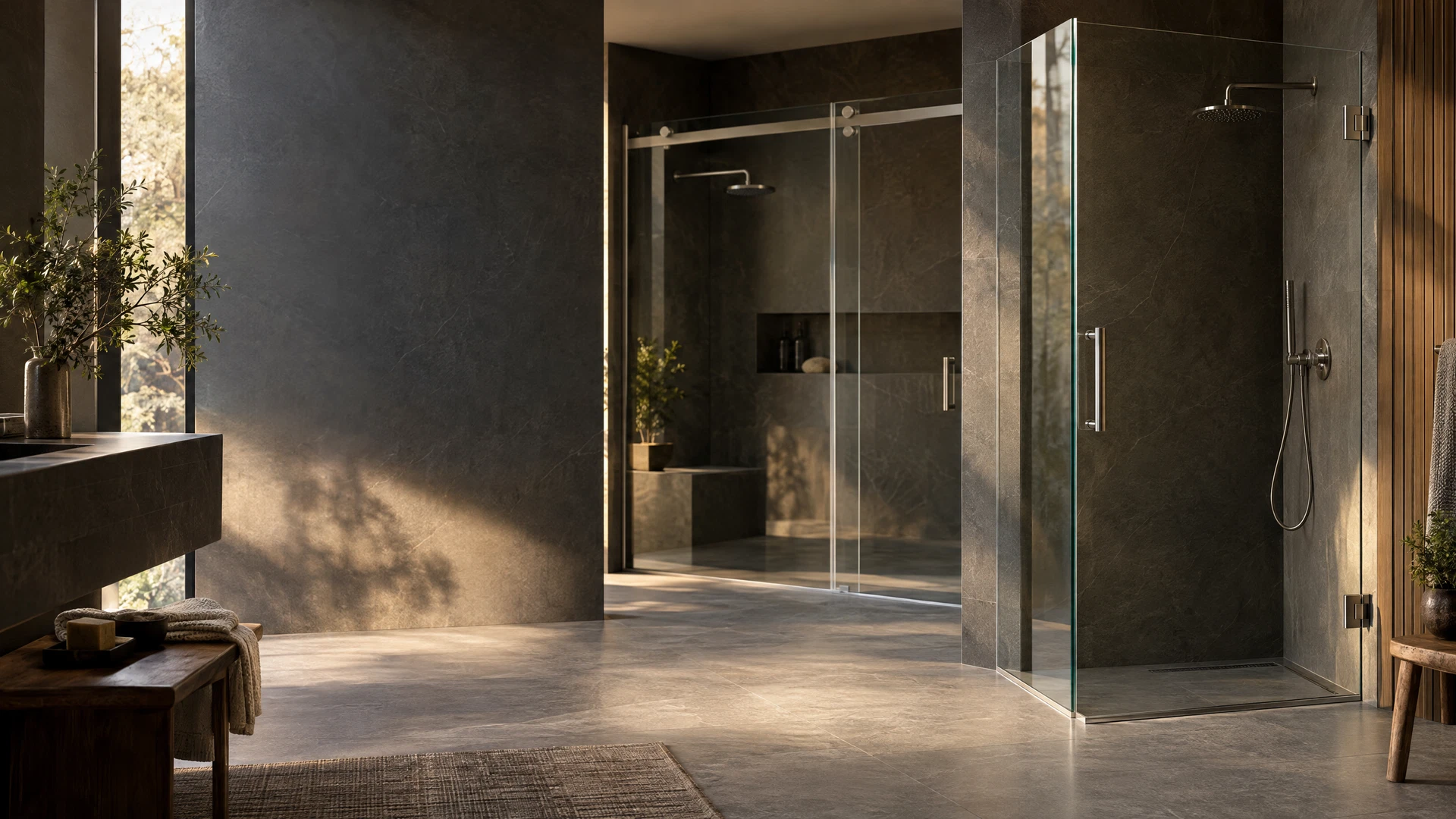
Above the panels — or on some systems below them — runs the track: the header rail the travelling panel hangs from, fixed to the wall or ceiling structure, carrying the panel’s entire weight through its rollers along every centimetre of every journey. This is the line to read hardest in a sliding quote, because it concentrates more of the system’s cost and nearly all of its character. A well-made track is straight, rigid, properly fixed into sound material, and matched to the rollers that run in it; the door’s smoothness, quietness and alignment are all decided here before the glass is even hung. A cheap or flexing track announces itself within the year — as noise, as judder, as a panel that drifts out of line and starts meeting its seals unevenly.
A specified quote names the track system: what it is, how it is fixed, and what runs in it. An unspecified one says “sliding system included”, which can describe anything from a substantial engineered rail to the lightest channel that will hold a panel up for the photograph. If one line of a sliding quote justifies a question, it is this one: which track system, fixed how, carrying what weight? Everything you will feel when you use the door — every day, for years — is the answer to that question. Whether a door slides true or starts sticking and juddering is decided by this hardware long before it is decided by age, as our guide to a sliding shower door not sliding shows from the repair side.
Rollers and soft-close
The rollers are the contact point between the panel’s weight and the track: small wheeled carriages, hung from or clamped to the panel, that carry the full load and turn it into movement. They are the hardest-working components in the system and the most honest indicator of its grade. Quality rollers run on proper bearings, carry their rated load without flattening or seizing, and are matched to the track profile they run in. Economy rollers do the same job on day one and a progressively worse job every month after — the wear pattern our repair work knows well: judder, noise, a panel that drops slightly and begins to scrape and close unevenly.
Some systems add soft-close: a damper mechanism in the track that catches the travelling panel near the end of its run and draws it closed gently, instead of letting it arrive at the frame at whatever speed it was pushed. It is a real mechanism with a real job — it protects the glass edge, the seals and the frame from years of small impacts — and in a quote it appears in one of two honest ways: named as part of the specified system, or named as an option you can take or leave. What it should never be is a label. A quote that trades on the words without naming the mechanism has told you nothing; ask what physically slows the panel. And as with the track, the rollers should be specified as a matched set for the panel — a sliding door’s running gear is a system, and its quote should read like one.
Guides, seals, thresholds
The travelling panel is carried at the top, but it is kept at the bottom. A floor guide holds the panel’s lower edge in line as it travels — preventing the swing and sway that would otherwise bang it against the fixed panel and the frame — without carrying its weight. Guides are small, cheap-looking parts with an outsized job: a missing, worn or badly set guide is a panel that wanders, knocks and closes out of line.
Sealing a sliding door is a different problem from sealing a hinged one, and the quote’s seal lines should reflect it. A hinged door closes against its seals and is held there; a sliding door’s panels pass each other, so its water control is built from overlap, brush and fin seals where the panels meet, seals at the wall edges, and a threshold or bottom profile that returns water to the tray. None of it clamps shut — which is why the design and condition of these profiles matters, and why a quote should name them rather than leave “seals” as a rounding error. Fitted well, a sliding door contains its water honestly; fitted vaguely, it leaks at the overlap and the meeting edges, and the leak gets blamed on the system instead of the specification.
The guide figure and what moves a quote within the range
For a complete sliding door in 10mm glass, the guide figure we work to is AED 2,800–4,500 — a range, not a price, with the exact quote confirmed after measurement. As with any honest range, it is worth knowing what the variation is made of:
- Opening width and panel count. A standard two-panel layout is the system’s simplest form; wider openings ask for larger panels, two travelling panels, or a fixed panel plus door plus return — more glass, more running gear, more fitting.
- The track system specified. The grade of the header system and its fixings is the quote’s centre of gravity, and systems differ genuinely in substance — this is the line where a lower figure most often turns out to have bought less.
- Running gear and mechanisms. The rollers the panel rides on, and whether the system includes a soft-close damper, are specification choices the quote should name — each is part of what the figure is built from.
- The opening itself. Sliding systems are unforgiving of untrue openings: walls out of plumb and an unlevel head or sill ask for careful setting-out and sometimes shaped glass, because the track must run true even where the room does not.
- What the job surrounds. An old enclosure to remove and dispose of, access constraints, building work rules — the scope around the shower moves the total as the shower itself does.
What should not move a quote inside the range is silence: a figure at the low end built on an unnamed track and unspecified rollers is not the same system for less — it is a lesser system, and the difference will be paid later in running repairs instead of now in specification. Comparing sliding against the other door system is its own question, worked through in our hinged vs sliding shower glass comparison; within sliding quotes, compare the systems line by line.
Frequently asked questions
Why does a sliding door cost more than a hinged one?
Because there is more machine in it. A hinged door’s hardware is a set of hinges and a handle; a sliding door adds a full track system, roller carriages, guides and a more elaborate seal arrangement, and its panels overlap — so there is more hardware, more engineering and usually more glass in the same opening. The guide ranges reflect that: sliding is the heavier system to build well.
Is soft-close worth having on a sliding shower door?
As a mechanism, it does a genuine job: it stops a heavy glass panel arriving hard against the frame thousands of times over the door’s life, which protects edges, seals and fixings, and it makes the door feel composed. Whether it is worth it on your door depends on the system and how the door will be used — what matters in the quote is that it is a named mechanism, included or optional, never just a word in the description.
The quote just says “sliding system included”. Is that enough?
No — that phrase can cover systems of very different substance. Ask which track system it is, how it is fixed, what rollers run in it and whether they are rated for the panel’s weight. A company quoting a real system can answer all four from its own specification; a company quoting a phrase cannot.
Why is my sliding quote for a wider opening not simply proportional?
Because the system steps rather than stretches: past certain widths the layout changes — an extra panel, a second travelling door, a heavier track to carry it — and each step adds components, not just area. Panel count and track specification move sliding quotes more than opening size does.
Can I get the exact figure from photos?
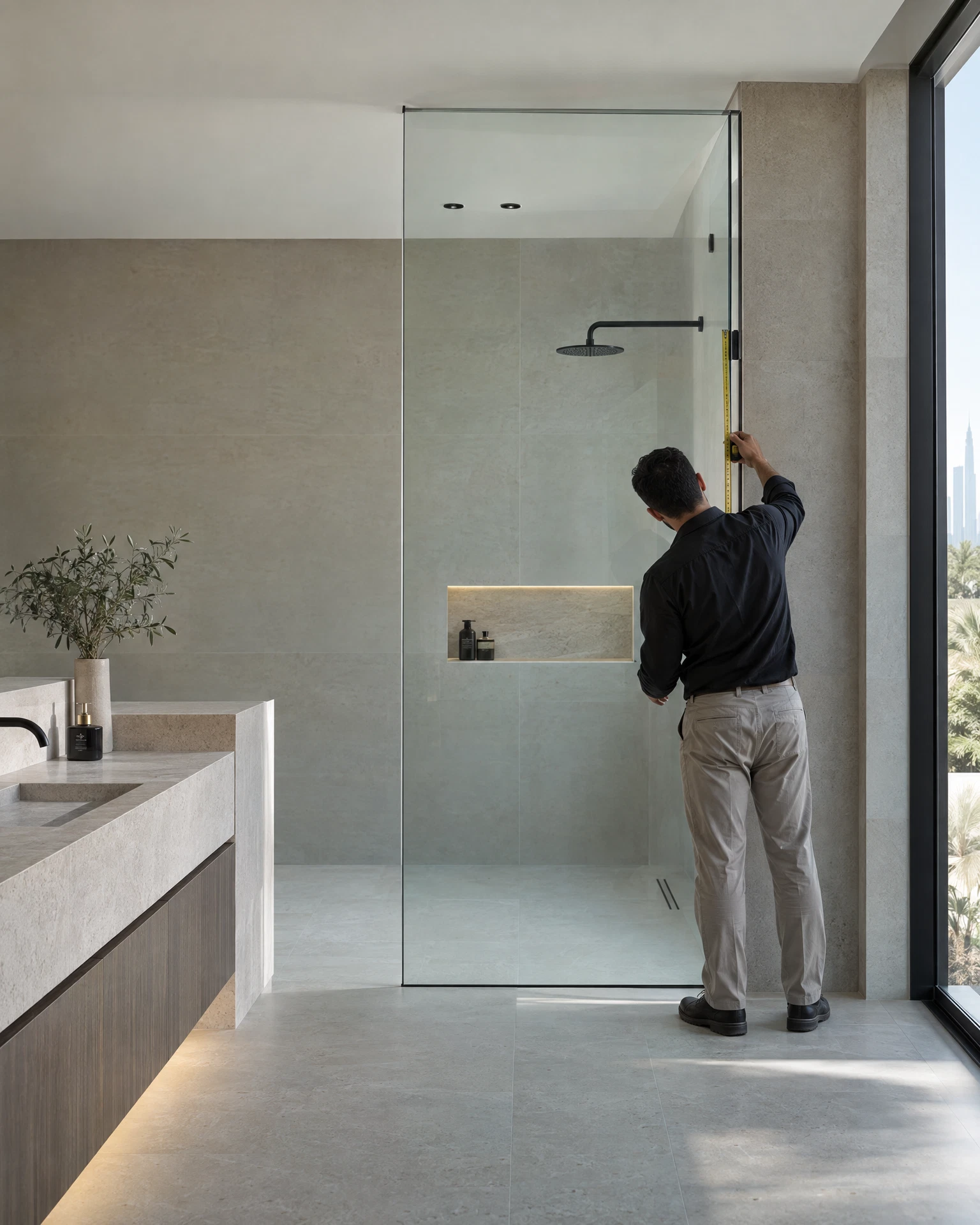
Photos and rough sizes earn a preliminary estimate that places your opening in the guide range. The exact quote is confirmed after measurement: sliding systems stand on the opening’s true width, the headroom for the track, wall plumb and the overlap the layout needs — none of which a photograph can certify. Send the photos anyway; they start the conversation properly.
Talk to us about a sliding door quote
If you are planning a sliding shower door and want a quote that names its system, message us on WhatsApp on +971 52 443 2655 with photos of the bathroom and your rough opening width. We will quote the complete system — glass, track, rollers, guides, seals and fitting — and confirm the exact figure after measurement, so you can see precisely what you are paying for.
Message us on WhatsApp for a sliding door quote
This guide is part of our Shower Glass Prices series. Next: Bathtub Glass Screen Prices: What Changes the Number →


