Choosing between a fixed and a hinged bath screen comes down to how you actually use the bath. A fixed screen is a single panel of glass, sealed along the bath edge, that never moves. A hinged screen swings open when you need access. How much of the bath either screen covers depends on the screen’s length and position — the movement type decides access and cleaning, not coverage. Fixed suits a bath that is mostly a shower — one or two adults, in and out over the end of the bath. Hinged suits a bath that is still a bath: children to wash, a tub to clean properly, taps at the far end to reach. This guide compares the two on the four things that actually decide it — sealing, access, cleaning, and what each one asks of your bath’s edge — so the choice is made on your routine, not on a photograph.
At a glance
- Fixed: one glass panel, sealed to the bath edge, no moving parts. The simplest, most sealed option — but it only covers part of the bath, and the rest stays open.
- Hinged: a panel on hinges that swings in or out over the bath, opening fully for access — with seals and hinges that need the door hung true. It can run longer than a fixed screen because it swings clear, but how much of the bath it covers still depends on its length and position.
- Bathing children: hinged, almost always. You need to reach the whole bath, not lean around a fixed panel.
- Cleaning the bath: hinged again — a fixed panel guards exactly the stretch of bath that is hardest to clean around.
- The decider nobody mentions: your bath’s rim. Each type needs a different edge, and the wrong edge rules a type out before preference gets a vote.
The two types, plainly
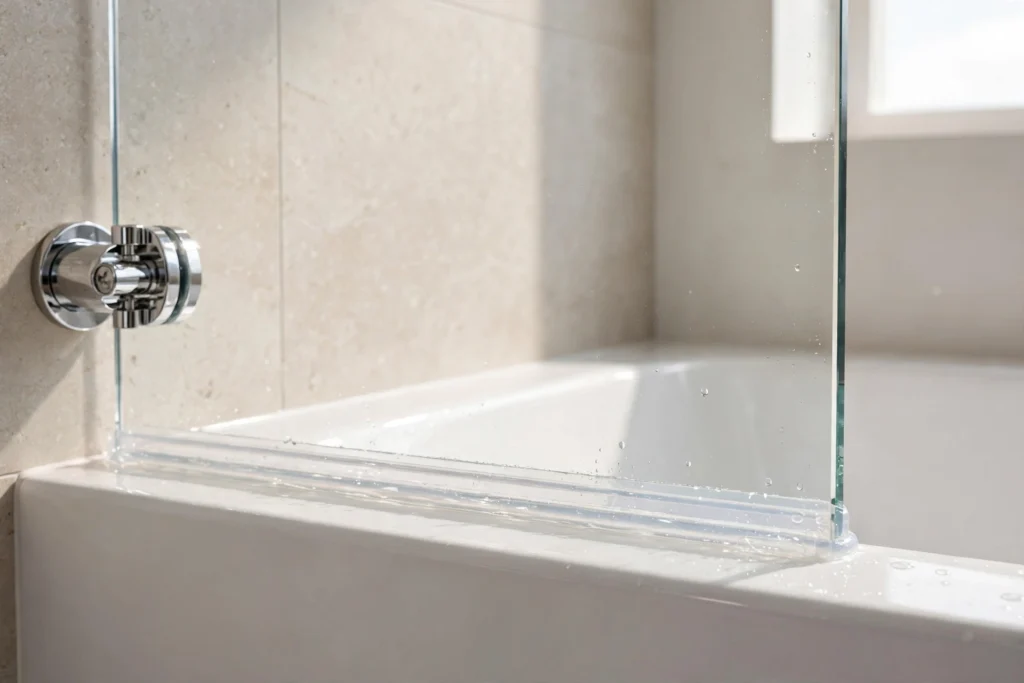
A fixed bath screen is one panel of toughened glass — ours are 10mm — clamped or channelled to the wall at one end and sealed along the bath rim with a profile and silicone line. It has no hinges, no handle, and nothing to adjust. It stands over the shower end of the bath, typically covering roughly a third to a half of the bath’s length, and it turns that end into a shower zone while the rest of the bath stays open to the room.
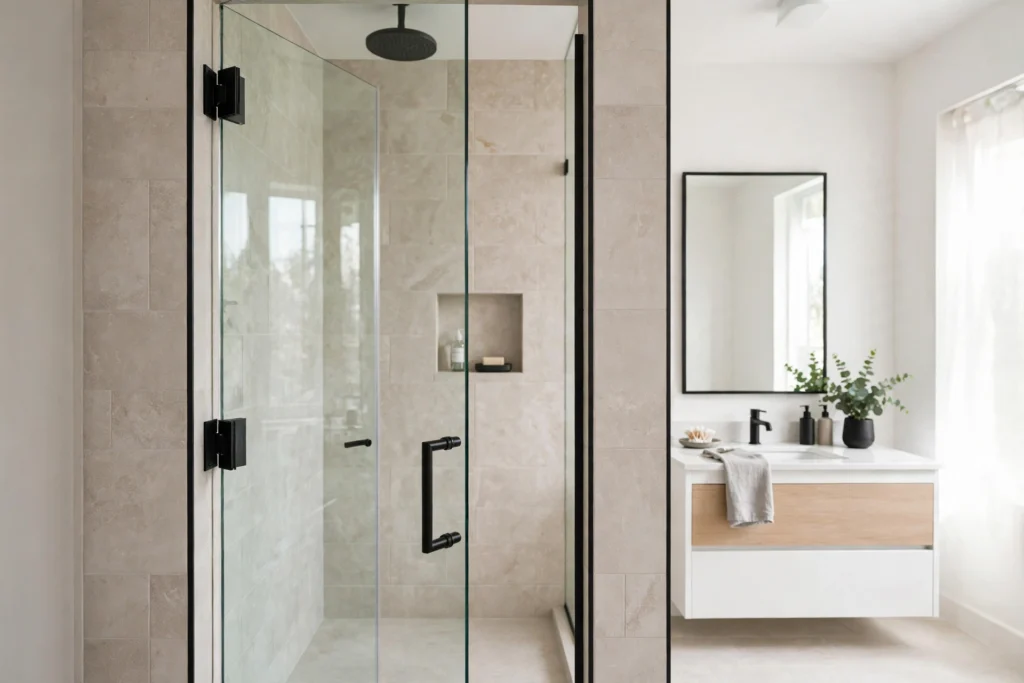
A hinged bath screen is also 10mm glass, but the panel hangs on hinges — from the wall, or from a short fixed return panel — and swings, usually inwards over the bath or outwards over the room, sometimes both ways depending on the hinge type. Because it moves, it can be longer: it can run most of the bath’s length when closed, giving a much more enclosed shower, and then swing clear when the bath is used as a bath. That movement is the whole difference, and everything below follows from it.
Neither type turns a bath into a sealed shower enclosure, and neither should be sold to you as one. Both are splash screens: they hold back the water of a normal shower taken at the screen end, and both leave an open stretch of bath that direct spray will escape through. Within that honest limit, they differ a great deal.
Sealing compared
The fixed screen seals better per centimetre, for a simple reason: its lines never move. The bottom edge sits in a profile on the bath rim with a continuous seal; the wall end is a fixed joint. There is nothing to wear in the way a door’s seals wear, and nothing to drop out of alignment. If the rim it sits on is sound and level, a fixed screen’s seal line is the most dependable on any bath screen.
The hinged screen seals with a bottom sweep profile along its lower edge, like a shower door, plus seals at the hinge side. Those seals work — but they are working parts. The sweep flexes every time the screen swings, and it only seals if the screen hangs true: a hinged screen that has dropped slightly on its hinges leaves a gap at the far corner of the sweep, exactly as a shower door does. In practice the difference is not “sealed versus leaky” — a well-hung hinged screen keeps a family shower’s water in the bath. It is “sealed and forgotten” versus “sealed, with seals that will one day need renewing and hinges that must stay tight.”
One more sealing difference matters in real bathrooms: coverage. A hinged screen usually runs longer, so less of the bath is open to spray in the first place. A fixed screen seals its own lines perfectly but leaves more of the bath uncovered. Which matters more depends on how the shower is used — a fixed head at the screen end plays to the fixed panel’s strength; a hand shower waved around by children plays to the hinged screen’s coverage.
Access: bathing kids, and cleaning the bath
This is the section that decides most family baths, and it is where the fixed screen’s simplicity costs the most.
Bathing children. With a fixed screen, the panel stands permanently over the shower end — which on most baths is also the end where the taps are, and where a small child sits. You bathe them from the open stretch, reaching along the bath, leaning over the rim and around the glass. It is manageable with a baby seat at the far end; it is genuinely awkward with a toddler under the taps. A hinged screen swings out of the way and gives you the bath as the bath was built: kneel at the side, reach everything, close the screen again at shower time. If the bath’s main job for the next few years is children, this point outweighs every other in the guide.
Cleaning the bath. A bath under a fixed screen has a shadow zone: the stretch behind the glass, along the rim and around the taps, that you can only reach by leaning over the bath or climbing in. It is also the stretch where soap and hard-water marks build fastest. A hinged screen opens, and the whole rim and bath can be wiped in one pass. The glass itself is equal work either way — one panel, squeegeed after showering — though the hinged screen’s sweep seal and hinge line collect scale at the edge and need a wipe now and then.
Getting in and out. Adults showering over the bath step in at the open end with either type, and there is little to choose between them. Anyone with limited mobility who uses the bath itself will find the hinged screen’s opening far easier than climbing past a fixed panel.
Edge requirements, per type
A bath screen is fitted to the bath’s rim, and the rim has requirements that differ by type. This is the part to check before falling for either option.
A fixed screen needs a continuous, flat, sound stretch of rim along the length the panel covers — the profile and seal sit on that line from wall to panel end. The rim must be wide enough to take the profile and its seal, and firm: a rim that flexes or a bath that moves on its frame will work the seal line until it leaks. The wall end needs a true, plumb surface to fix to.
A hinged screen needs less continuous rim — its bottom edge carries a sweep rather than a sealed profile, and it tolerates small rim unevenness better — but it asks more elsewhere. The hinge fixing needs a solid wall or a solid fixed return to hang a heavy 10mm panel from; the screen needs swing room, clear of taps that stand tall off the rim, towel rails and anything else in its arc; and the rim under the sweep still needs to be reasonably even, because the sweep bridges small variation, not steps.
If your bath’s edge is narrow, sloped or uneven, neither type should be chosen until the edge itself has been assessed — awkward edges have their own solutions, and forcing a standard screen onto one is how leaks are bought. Send us a photo of the edge and we will tell you which type it can honestly take.
The decision, in one flow
Work through these in order; the first one that gives a clear answer usually settles it.
- Is the bath mainly for bathing children, or for bathing at all? Yes → hinged. The access decides it.
- Is it really a shower that happens to be over a bath — adults only, bath rarely filled? → fixed is the simpler, better-sealed answer.
- Does the rim support it? A sound flat rim along the shower end suits fixed; a short sound section plus a solid hinge wall suits hinged. If the edge is doubtful, get it assessed before choosing.
- How is the water used? Fixed shower head aimed into the screen end → either works, fixed seals best. Hand shower, high spray, water everywhere → the hinged screen’s longer coverage earns its seals.
- Who cleans it, and how often? If the bath is scrubbed weekly, the hinged screen’s open access will be thanked every week.
Our bathtub glass screens page shows both types fitted, and the screens we install across Dubai, Sharjah, Abu Dhabi and Ras Al Khaimah. If you are between the two after reading this, a photo of your bath — full length, plus a close-up of the rim — is enough for us to tell you which type your bath takes and which suits how you use it.
Frequently asked questions
Which bath screen keeps more water in — fixed or hinged?
Per centimetre of edge, the fixed screen: its seal lines never move. But the hinged screen usually covers more of the bath, so less spray reaches open bath in the first place. For an adult showering under a fixed head, both keep the floor dry. For a hand shower waved around, coverage wins and the hinged screen is the safer choice.
Can a hinged bath screen fold completely out of the way?
Most swing through a wide arc — in over the bath, out over the room, or both, depending on the hinges — which leaves the bath fully open for bathing and cleaning. It does not disappear: the panel stands against the wall or over the bath when open, so check the swing is clear of tall taps, rails and anything wall-mounted in its path.
We mostly shower, but the bath gets used for kids at weekends. Which type?
Hinged. A fixed screen’s one real cost is access, and weekend bathing is exactly the use that pays it every week. The hinged screen gives you the enclosed weekday shower and the open weekend bath; its seals simply need the same occasional attention as any shower door’s.
Does a fixed screen need the whole bath rim to be level?
It needs the stretch it sits on to be flat, sound and firm — that line carries its profile and seal. Beyond the panel, the rim’s condition matters much less. A hinged screen is more forgiving along the rim but less forgiving about its hinge fixing and swing clearance. Either way, the edge gets checked at measurement before a type is confirmed.
Can I change from a fixed screen to a hinged one later?
Yes — the screens are separate fittings, and changing type is a new screen, not a new bath. The wall and rim fixings differ, so expect fresh fixings and the old holes made good. It is far cheaper to choose on use now than to swap later, which is why the access questions above come first.
Talk to us about your bath screen
If you are choosing between a fixed and a hinged bath screen, message us on WhatsApp on 052 443 2655 with a photo of the full bath and a close-up of the rim. Tell us who uses the bath and how, and we will tell you honestly which type suits you — and whether your bath’s edge will take it — before you commit to anything.
Sliding is the third option over a bath — see sliding vs fixed screens over a bath for how a bath slider compares with both.
This guide is part of our Bathtub Glass Screens series. Next: Sliding vs Fixed Screens Over a Bath →