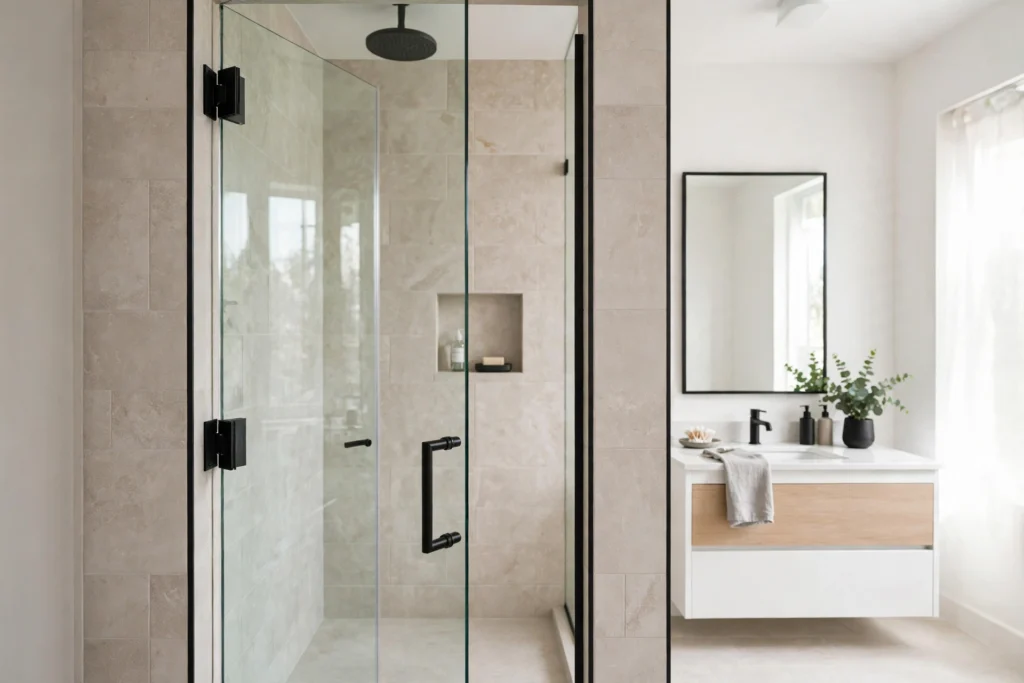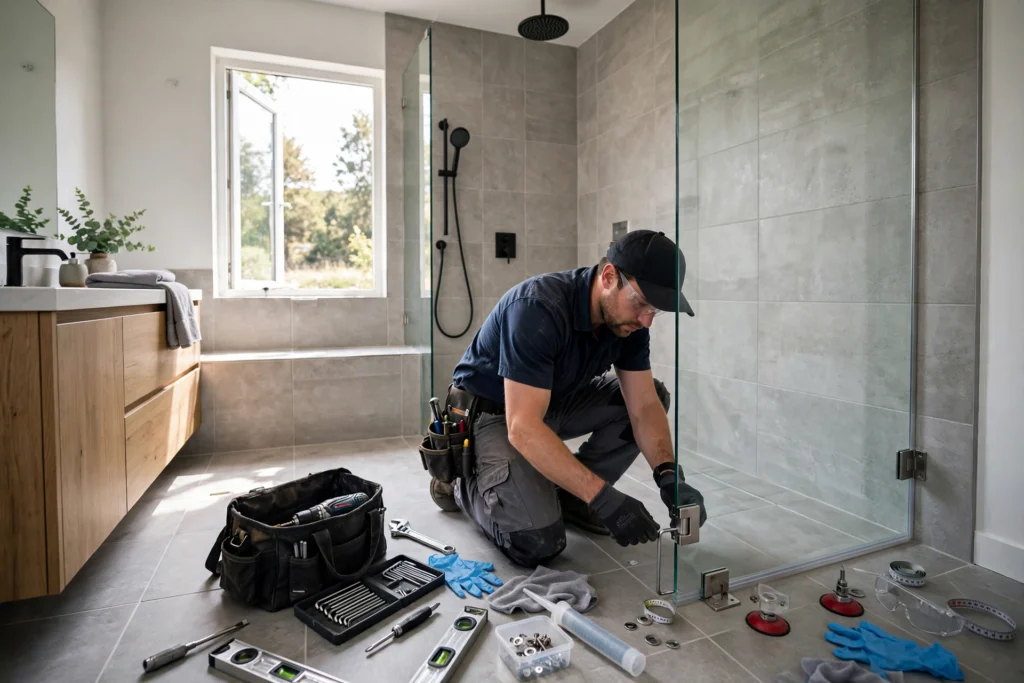
Bath screens rarely fail dramatically. They tire: the glass etches with years of scale until it never quite looks clean, the seals perish and lift, the hinges develop a looseness you can feel, and one day the screen that was fitted with the bathroom simply looks like the oldest thing in it. Replacement is the planned answer to that tiredness — new glass, made for the bath as it stands now — and it raises three practical questions this article works through: what state are the old screen and the bath edge actually in, can any of the old fixings be reused, and is replacement the moment to change the type of screen rather than repeat it? It also covers the visit itself and what happens to the old glass afterwards.
One boundary first, because it changes everything about the job: this article is about a screen that is tired, not damaged. If your old screen is cracked or has shattered, stop here — damaged glass is a safety matter before it is a replacement matter, and our guide to cracked or shattered shower glass covers making it safe and how replacement works from there. Everything below assumes intact glass that has simply reached the end of its presentable life.
At a glance
- Replacement starts with assessment, not measurement: the old screen, its hardware, and — just as much — the bath edge and wall it fixes to.
- Sometimes replacement is more than the screen needs: perished seals or tired hinges on sound glass are renewal work, and we will say so.
- Fixings: the honest answer is “sometimes, partly”. Sound wall fixings in the right positions can occasionally be reused; the glass itself never is — a new panel is made to its own hardware layout, because toughened glass cannot be re-drilled.
- Replacement is the natural moment to upgrade type — fixed to hinged, short to fuller coverage — because the new glass is being made from scratch anyway.
- The old screen is removed and taken away as part of the job — you are not left with a sheet of glass to dispose of.
Assess the old screen and edge
The assessment reads the whole installation, not just the glass. The glass itself: scale etching that no longer cleans off, edge chips, scratches, a panel that has been living slightly out of line. The hardware: play in the hinges, corrosion on brackets and channels, fixings that have worked in their holes. The seals: hardened, split, lifted or blackened — the most common single reason a screen looks finished. And the bath edge and wall, which matter more than owners expect: the new screen fixes to the same edge and the same tiles, so their condition is part of the job — an edge whose silicone line is hiding damage, tiles that have loosened around the old fixings, or a bath edge that was never level and has been taxing the old screen’s seals for years. A replacement fitted onto a problem edge inherits the problem, so the edge is judged before the glass is specified.
That assessment sometimes ends with “you don’t need new glass.” If the panel is sound and the tiredness lives in the seals and hardware, renewal — new seals, hinge work, a proper clean of the fixing lines — restores the screen for a fraction of the disturbance, and that is repair work in the ordinary sense of our shower glass repair service. The wider verdict pattern — when renewal is honest and when it is money into a screen that will keep disappointing — is the same one set out in our repair or replace decision guide for enclosures. Replacement is the right answer when the glass itself is etched, damaged or wrong for how the bath is used now — not merely when its soft parts have aged.
Fixings: reuse or renew
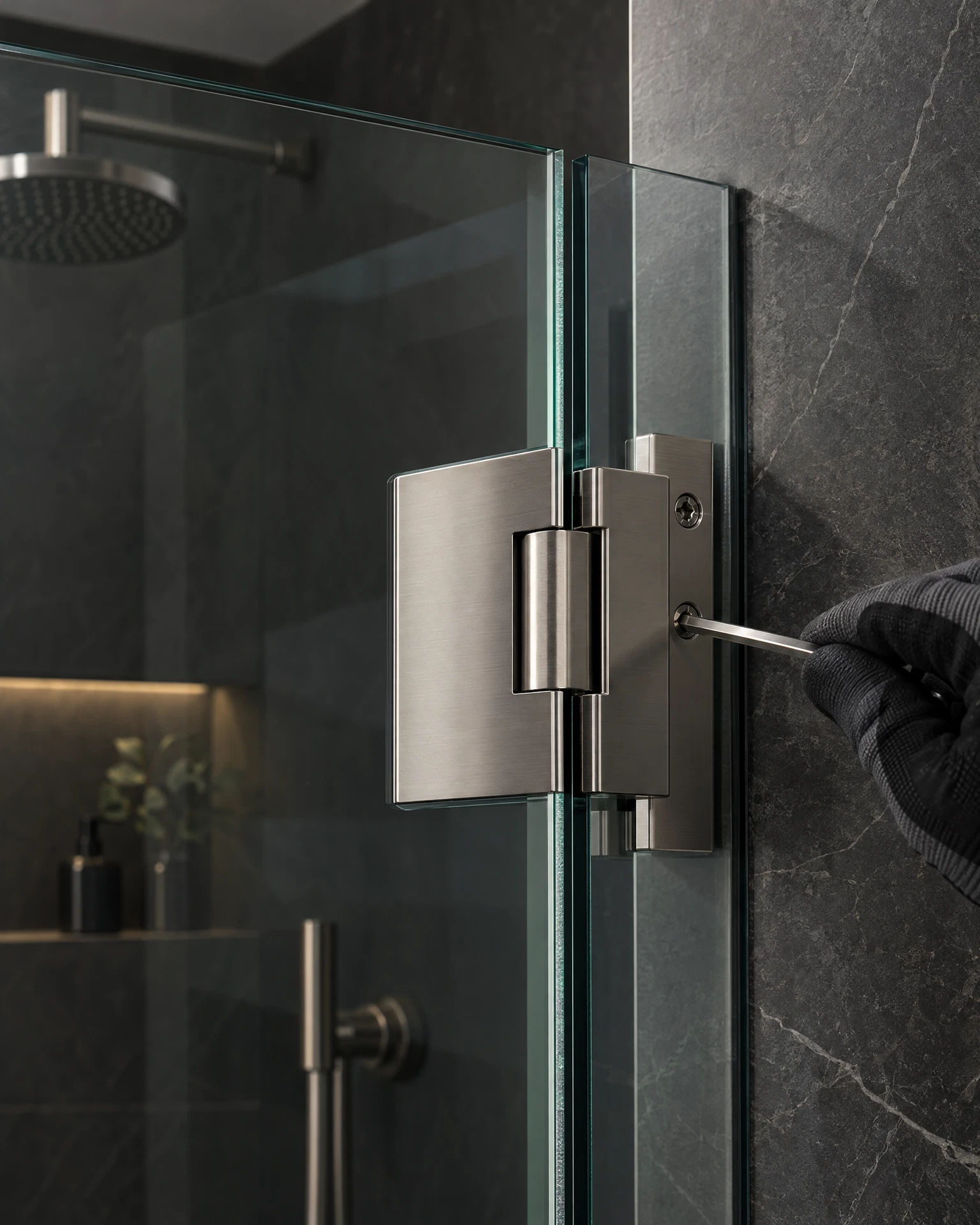
“Can the new screen use the old fixings?” is the question every replacement enquiry asks, and it deserves the precise answer rather than a hopeful one. There are two halves to it. The fixing points in the wall and bath edge — the drilled positions and what sits in them — can sometimes be reused, when the hardware there is sound, uncorroded, and happens to stand exactly where the new screen’s hardware needs to stand. That coincidence is less common than it sounds, because a new screen’s layout is set by its own size and type. The glass is never reused, and neither are its holes: a replacement panel is drilled and notched for its hinges and brackets before toughening, those positions are fixed at manufacture, and toughened glass cannot be cut or re-drilled afterwards — so a new panel cannot be made to fit old hardware positions unless those positions are adopted as the specification from the start.
In practice, then, replacement usually means new hardware fitted fresh, with sound old pieces kept only where they genuinely suit — a decision made piece by piece at assessment, not assumed from photographs. There is also a positive reason to renew: hardware is where a screen’s feel lives, and building ten-year-old hinges into brand-new glass rebuilds the old screen’s looseness into the new one. Where old fixing holes fall outside the new layout, they are filled and sealed as part of the fitting, so the finished job does not carry a map of the old screen on the tiles.
Same type or upgrade?
Because the new glass is being made from scratch regardless, replacement is the one moment when changing type costs no extra disturbance — the old screen is coming off either way. The common upgrades are all responses to how the bath’s use has changed. Fixed to hinged, when the fixed panel’s reach-around cleaning and climbing-in have worn thin: the choice between them is set out in our comparison of fixed vs hinged bath screens. Short to fuller coverage, when the household has shifted from bathing to showering and the splash pattern has outgrown the old screen’s length. Dated framed to frameless or slim-profile, when the replacement is really about the room’s look — new glass in the old construction would repeat a look the owner is tired of along with the screen. And sometimes the right answer is like-for-like: the type was right, the screen simply aged, and a faithful replacement in new glass and new hardware is the whole job. What does not change with type is the bath itself — its edge, its length, the shower position above it — and every upgrade is judged against those, exactly as a first installation would be.
The replacement visit
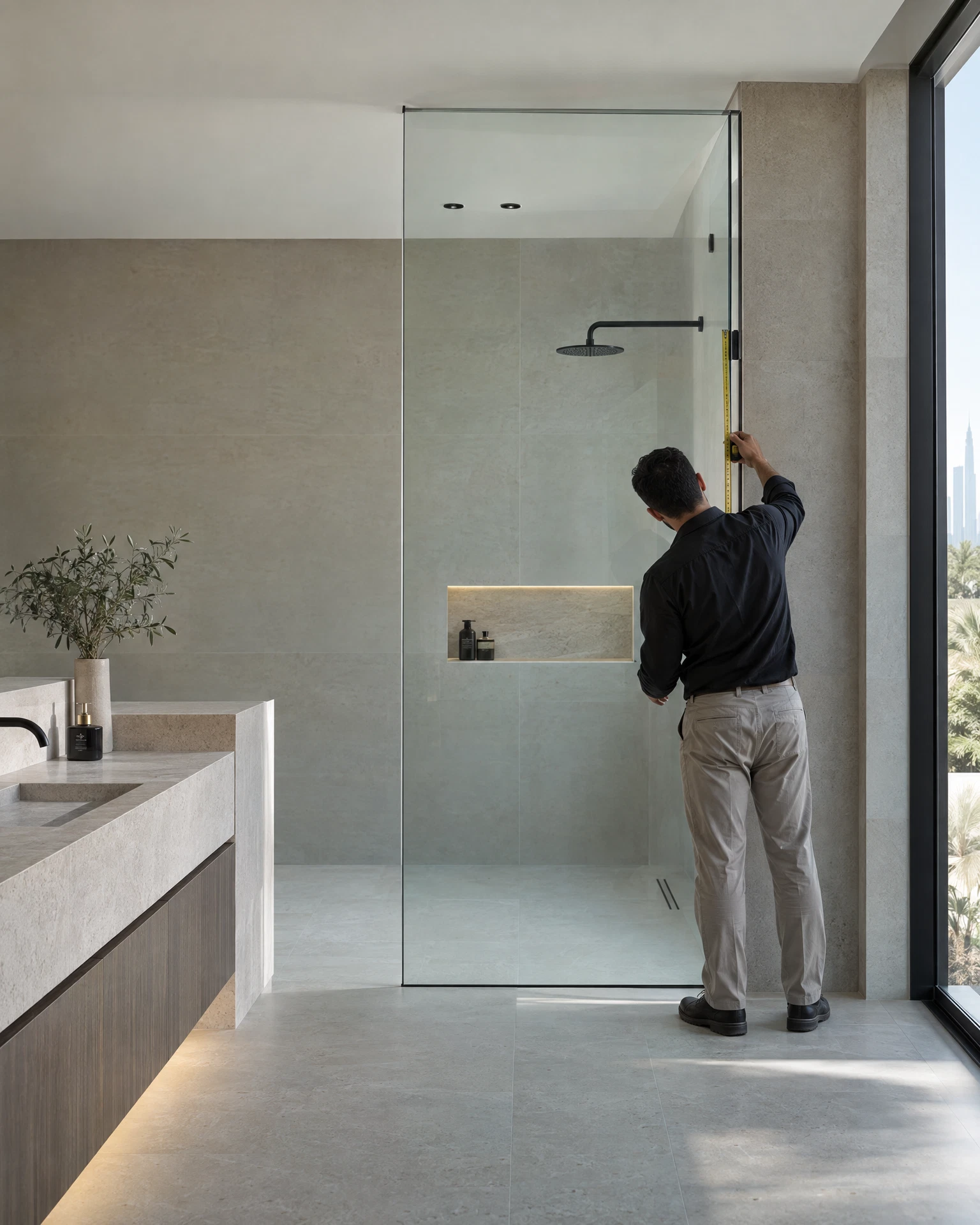
Replacement typically runs in the same shape as any measured glass work, with the old screen’s removal folded in. It starts from photographs and then a measurement: the opening, the bath edge, the wall — taken from the room as it stands, not copied off the old panel, because the new glass should correct the old fitting’s errors rather than inherit them. The new panel is then made to that specification — cut, drilled, toughened — which is why replacement is not a same-day swap of an off-the-shelf screen: made-to-measure glass has a making interval between measuring and fitting, and any installer who measures your bath is working to that rhythm.
The fitting visit itself is typically a single visit in two halves: the old screen is unsealed, un-fixed and lifted away, the edge and fixing lines are cleaned back and made good, and the new screen is fitted, aligned and sealed in its place. Until that visit, your old screen stays in service — there is no gap in the bathroom’s life where it stands screenless waiting for glass. If anything in the old installation is found to be worse than the photographs suggested — a fixing that was holding in crumbled tile, say — you hear about it from the evidence, with the options, before the new glass is committed to that spot.
Disposal of the old screen
The old glass leaves with the installer. A removed bath screen is an awkward, heavy sheet of toughened glass with old sealant and hardware attached — not something that belongs in a household skip run or leaning in a corridor — and removal and disposal of the old screen is part of the replacement job, not an errand left with you. The same applies to the old hardware and perished seals that come off with it. If you have any wish to keep a piece — occasionally someone wants the old panel for a garden cold frame, and stranger things have been asked — say so before the fitting visit, because the default is that everything that comes off goes away the same day.
Frequently asked questions
Can the new screen use the old fixings?
Sometimes the fixing points, never the glass. Sound wall hardware standing exactly where the new screen needs it can occasionally be kept, but a new panel is drilled for its own hardware before toughening and cannot be re-drilled afterwards — so in most replacements the hardware is renewed and the layout set fresh, with old holes filled and sealed. Anyone who promises full reuse from a photograph is guessing.
How long does replacement take?
Two stages, typically: a measurement, then — after the new glass has been made to that measurement — a single fitting visit in which the old screen comes off and the new one goes on. The interval between them is the glass-making time, and your old screen stays in use throughout it.
Can I upgrade from a fixed screen to a hinged one during replacement?
Yes — replacement is the easiest moment to change type, because the new glass is made from scratch and the old screen is coming off regardless. Whether a hinged screen suits your bath edge and swing space is judged from the room, in the same way as the fixed vs hinged choice for a new installation.
My screen leaks but the glass looks fine. Do I need replacement?
Probably not — leaking with sound glass is usually the seals, and seals are renewable. That diagnosis — where bath screens leak and whether it is the seal, the line or the screen — is covered in our bath screen seals guide. Replacement is for when the glass or the type itself is the problem; we will tell you if a seal renewal is all yours needs.
What should I send on WhatsApp for a replacement quote?
A photo of the whole screen and bath, one along the bath edge, and close-ups of the hinges or brackets and any tired seals. Tell us what is driving the replacement — looks, leaks, looseness, or a change of type — because that decides whether we are quoting glass or advising renewal first.
Talk to us about replacing your bath screen
If your bath screen has reached the tired stage, message us on WhatsApp on +971 52 443 2655 with photos of the screen, the bath edge and the hardware. We will tell you honestly whether it needs new glass, a change of type, or just its seals and hardware renewed — and if it is replacement, how the fixings question lands on your bath. The full range of what the new glass could be is on our bathtub glass screens page; for figures, the shower glass price guide sets out how bath screens are priced, and the exact number follows measurement, as always.
WhatsApp us about replacing your bath screen
This guide is part of our Bathtub Glass Screens series. Next: Converting a Bath Area: Screen on the Bath vs Removing the Bath for a Walk-In →